The Beginning of Punjabi Nationalism
A Heritage Book by Rai Bahadur Mul Raj (1855-1945)
Autobiography of Dr. Rabinder Nath's Great-Great-Grandfather - Founder of Punjab National Bank, Arya Samaj Leader, and Pioneer of Indian Nationalism
A Heritage Book by Rai Bahadur Mul Raj (1855-1945)
Autobiography of Dr. Rabinder Nath's Great-Great-Grandfather - Founder of Punjab National Bank, Arya Samaj Leader, and Pioneer of Indian Nationalism
"The Beginning of Punjabi Nationalism" is a remarkable book written by Dr. Upender Nath about the life and times of Rai Bahadur Mul Raj, a towering figure in India's freedom movement and social reform. The book is based on Rai Bahadur Mul Raj's own accounts and memoirs.
Originally dictated in the 1930s to his grandson Dr. Upender Nath (Royal Surgeon to the Nizam of Hyderabad), this extraordinary document captures firsthand accounts of pivotal moments in Indian history - from the founding of the Arya Samaj to the establishment of Punjab National Bank, from the birth of the D.A.V. College movement to the early days of the Indian National Congress.
First published in 1975 by the Vishveshvaranand Vedic Research Institute (V.V.R.I.) in Hoshiarpur, the book was lovingly relaunched in 2016 by the Dr. Rabinder Nath Foundation as its inaugural initiative. This relaunch marked not just the preservation of a family heirloom, but the revival of a crucial historical document that fills significant gaps in the history of Punjabi nationalism and India's freedom struggle.
Dictated by Rai Bahadur Mul Raj to his grandson Dr. Upender Nath in Lahore
First published by V.V.R.I. Vedic Research Institute, Hoshiarpur
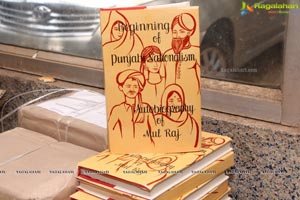
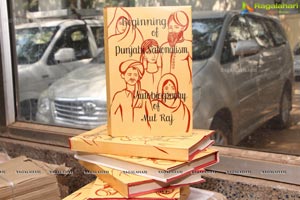
Relaunched by Dr. Rabinder Nath Foundation with new binding (red cover with brown paper folding)
"Unbiased scholars will reconstruct the history of Arya Samaj on the basis of this autobiography."
Dive into 400 pages of history, exploring Punjab's transformation through the eyes of one of its greatest pioneers.
Access the full 400-page book instantly with Archive.org's beautiful online reader
Read on Archive.orgDownload the complete book (50 MB) to read offline on any device
Originally published: 1975 by V.V.R.I. Hoshiarpur
Relaunched: 2016 by DRNF
Digitized: 2025, freely available for research
400 pages | 50 MB
Freely available for educational and research purposes
A self-made scholar, social reformer, and nation builder who shaped modern India
Born in 1855 in Ludhiana, Punjab, Mul Raj rose from humble beginnings to become the first Punjabi to earn an M.A. degree from Calcutta University (1874). He was awarded the prestigious Premchand Roychand Scholarship, the highest academic distinction in India at that time. A self-made individual, he lived entirely on scholarships, demonstrating exceptional determination and brilliance.
In 1877, Mul Raj met Swami Dayanand Saraswati, a meeting that would change the course of his life and Indian history. He became the founding member and first president of Arya Samaj Lahore, drafted its constitution (Upaniyamas) and the famous Ten Principles. He advocated for an inclusive, broad-based reform movement that welcomed all seekers of truth, not limiting it to narrow philosophical doctrines.
Appointed Extra Assistant Commissioner in 1879, Mul Raj became the first Punjabi to hold this prestigious position. He rose to District and Sessions Judge, serving with distinction for 32 years. This insider position in colonial administration gave him unique insights into British governance, which he later used to advocate for Indian self-governance and institutional development.
90 years that transformed a nation - from British annexation to the eve of independence
Born just 3 years after the British annexation of Punjab (1849), Mul Raj entered a world transformed by conquest. The 1857 Sepoy Mutiny erupted when he was just a toddler - his family fled to Hardwar to escape the violence. This early experience of displacement would shape his understanding of colonial power and native resistance.
Coming of age during the height of the British Raj, Mul Raj witnessed the consolidation of colonial rule. Educational reforms introduced English education, sparking intense debates about cultural identity. The rise of social reform movements like Brahmo Samaj (1828) and Arya Samaj (1875) challenged both orthodox Hinduism and British cultural dominance.
The founding of the Indian National Congress marked the beginning of organized political nationalism. Mul Raj would later draft the first constitution for the Congress in 1893, bridging social reform movements with political activism.
The Swadeshi movement gained national prominence (though Mul Raj had started his own Swadeshi initiatives in 1893). World War I brought economic hardship to India while also awakening new demands for self-governance. Indians who fought for the Empire began questioning why they couldn't govern themselves.
Gandhi's Non-Cooperation Movement (1920) and subsequent campaigns transformed Indian nationalism into a mass movement. The growing independence movement built upon the institutional foundations that pioneers like Mul Raj had established decades earlier.
Mul Raj's final years coincided with World War II and the accelerating negotiations for independence. He died in 1945 at age 90, just two years before Partition would tear apart the Punjab he had worked his entire life to build. He never witnessed the tragic division of his homeland.
Entered a world where Punjab had just been annexed (1849) and the great uprising (1857) erupted in his childhood
Came of age during the Indian Renaissance - when social reform movements challenged both tradition and colonialism
Created D.A.V. College, Punjab National Bank, and Swadeshi organizations that became foundations for independence
Passed away in 1945, witnessing the inevitability of independence but spared the trauma of Partition (1947)
"The first institution in India that institutionalized the Indian identity"
Swami Dayanand Saraswati established Arya Samaj in Bombay, challenging both orthodox Hinduism and British cultural dominance
Revolutionary approach: the Vedas contain the seeds of modern science, mathematics, and rational thought
Opposed caste discrimination, child marriage, and untouchability. Promoted women's education and widow remarriage
Created organizational structures and identity frameworks that fueled Indian nationalism and the freedom movement
In 1877, Mul Raj met Swami Dayanand Saraswati in Lahore - a meeting that would change both his life and Indian history. Immediately drawn to the Swami's vision, he became a founding member of Arya Samaj Lahore and was elected its first president.
Mul Raj drafted the Ten Principles (Niyamas) - the core articles of faith - and the Upaniyamas (constitution) that governed Arya Samaj operations. His legal and administrative expertise shaped the movement's organizational structure.
The movement split into two factions: the College Section (progressive, favoring modern education with Vedic values) and the Gurukul Section (traditional, favoring Vedic-only education). Mul Raj aligned with the College Section, leading to the founding of D.A.V. College Trust.
In his later years, Mul Raj became critical of the Arya Samaj's direction. He felt it had become too rigid, dogmatic, and narrow - losing the inclusive, truth-seeking spirit that Swami Dayanand intended. He advocated for an organization that welcomed all seekers of truth, regardless of philosophical beliefs.
"If Swami Dayanand had introduced philosophical questions, doctrines and theories into the articles of faith of the Arya Samaj, he would certainly have limited the number of men who could have entered it. His vision was broad-based and inclusive - a movement for all truth-seekers."
Inclusive & Progressive: Broad-based reform welcoming all seekers. Synthesis of Eastern wisdom and Western science. Focus on practical social reform over theological debate.
Organizational Architect: Drafted constitution and principles. First president of Lahore chapter. Founded D.A.V. College network. Bridged reform and nationalism.
Growing Rigidity: Movement became dogmatic and narrow. Lost inclusive spirit. Mul Raj eventually distanced himself. Advocated for return to original vision.
From one college in 1886 to 900+ institutions educating millions today
In 1886, Mul Raj and his colleagues in the Arya Samaj College Section founded the D.A.V. College Trust and Managing Society with a revolutionary vision: education that combined Western learning with Vedic values.
This was not merely compromise, but synthesis - creating institutions where students could study English literature and Sanskrit, physics and Vedic mathematics, chemistry and Ayurveda. The goal was to produce educated Indians who were neither completely Westernized nor trapped in tradition, but confident in both worlds.
D.A.V. College established in Lahore with Mahatma Hans Raj as first headmaster. Mul Raj served as founding member and key architect.
Combined Sanskrit/Vedic studies + English language + Modern sciences. Students learned both Ramayana and Shakespeare, both Vedic hymns and Newton's laws.
Quickly spread across Punjab and beyond. Created model for nationalist education that others replicated. Built infrastructure for intellectual resistance.
Produced generations of freedom fighters, scholars, and nation-builders. Students became leaders in India's independence movement.
Schools and colleges across India and abroad, from primary schools to professional colleges
Educating students from all backgrounds, continuing the mission of accessible, quality education
D.A.V. institutions now operate internationally, spreading the vision of synthesis education worldwide
Consistently ranked among India's best schools, producing scholars, professionals, and leaders
"Education is the foundation of national strength. We must create institutions that produce Indians who are confident in their heritage yet capable of engaging with the modern world."
Creating India's first truly Indian bank - a vision of economic self-reliance
In the late 19th century, all major banks in India were British-controlled: Bank of Bengal, Bank of Bombay, Bank of Madras. Indian businessmen and professionals faced discrimination, unfavorable terms, and limited access to credit. The banking system served colonial interests, not Indian development.
Mul Raj recognized that economic independence was impossible without financial institutions controlled by Indians. In daily conversations with like-minded reformers, he began building consensus for a radical idea: a national bank owned, operated, and controlled by Indians.
Mul Raj engaged in daily conversations with key collaborators: Lala Bulaki Ram Shastri, Sardar Dayal Singh Majithia, Lala Lai Chand, and others. These meetings, often informal but intense, slowly built the vision and practical plans for an Indian-controlled bank.
On May 19, 1894, Punjab National Bank was formally registered in Lahore with a capital of Rs. 2 lakhs. The founders created an iconic cheque design featuring the five rivers of Punjab, mountain peaks representing the Himalayas, and an image of goddess Lakshmi - symbolizing prosperity rooted in Indian identity.
As a government servant (Extra Assistant Commissioner), Mul Raj was prohibited from formally joining the bank's board. However, he made a powerful symbolic gesture: he withdrew all his personal funds from the British-controlled Bank of Bengal and deposited them in Punjab National Bank, demonstrating his confidence and commitment.
After retiring from government service in 1912, Mul Raj finally joined the board of Punjab National Bank as a Director, bringing his administrative expertise and reformist vision to the institution he had helped create.
Eventually, Mul Raj was removed from the PNB board due to conflicts over what he called "vagaries" and autocratic tendencies among the management. True to his character, he opposed practices he believed deviated from the bank's founding principles, even when it cost him his position.
One of India's largest public sector banks with thousands of branches nationwide
Provides banking services to millions of Indians, from small businesses to large corporations
From 1894 to today - witnessing and shaping India's economic transformation
The irony: An institution founded on integrity faced India's largest banking fraud (₹14,000 crores). A reminder that maintaining founding principles requires constant vigilance.
"Without control over our own financial institutions, we cannot achieve true economic independence. A nation must control its own capital to control its own destiny."
Economic nationalism in 1893 - a prescient vision Gandhi would later amplify
Swadeshi Pracharini Sabha founded in Lahore. Organized promotion of Indian goods and economic self-reliance.
"Swadeshi Vastu Pracharak" - published information about Indian manufacturers, products, and industries.
Gandhi's Swadeshi became a mass movement - building on foundations laid decades earlier by pioneers like Mul Raj.
As early as the 1870s, Mul Raj promoted Ludhiana cloth made by Muslim weavers, always wearing Swadeshi clothing himself. This wasn't just personal choice - it was political statement and practical demonstration.
Formally established the Swadeshi Pracharini Sabha with clear objectives: promote Indian goods, reduce dependence on foreign (British) products, create demand for indigenous industries, and build economic self-reliance as foundation for political independence.
Published "Swadeshi Vastu Pracharak" - a weekly bulletin containing detailed information about Indian manufacturers, where to buy Indian goods, quality comparisons, and pricing. Also established a library with comprehensive information about Indian industries.
Put his money where his principles were: invested in glass factory, pencil factory, chemical plant, and other indigenous industries. These weren't just investments - they were acts of nation-building.
Always wore Swadeshi clothing (Ludhiana cloth). Made it a point of honor and visibility. Led by example, not just words.
Invested in glass, pencil, and chemical factories. Promoted indigenous manufacturing. Created jobs and industries.
Weekly bulletin with manufacturer information. Library of Indian industry data. Made Swadeshi practical and accessible.
Economic self-reliance = True independence. Political freedom meaningless without economic freedom. Nation must control its production.
"Economic independence is the foundation of political independence. We cannot be truly free while we depend on foreign goods for our daily needs. Swadeshi is not merely buying Indian - it is building India."
Mul Raj understood in the 1890s what would become the cornerstone of Gandhi's movement in the 1920s: that economic dependence perpetuates political subjugation. His Swadeshi work was not preparation for future freedom movements - it was a freedom movement, fighting on the economic front decades before others recognized its importance.
When Gandhi later made khadi and Swadeshi central to the independence struggle, he was amplifying and mass-mobilizing a vision that pioneers like Mul Raj had been quietly building for over thirty years. The infrastructure, philosophy, and practical models were already in place - Gandhi's genius was making it a mass movement.
Using journalism as a tool for social reform and nation-building
In the late 19th century, most newspapers in India were either British-controlled or served British interests. Mul Raj recognized that social reform and nationalist aspirations needed media platforms where Indians could speak freely and advocate for their causes.
Together with Sardar Dyal Singh Majithia, a wealthy philanthropist and fellow reformer, Mul Raj helped establish The Tribune in Lahore - a newspaper that would become one of the most influential voices in pre-independence India.
Mul Raj worked closely with Sardar Dyal Singh Majithia, who provided the financial resources and vision for an independent newspaper. Together, they created The Tribune as a platform for reform advocacy and nationalist discourse.
Mul Raj used The Tribune to publish extensive articles advocating for the establishment of Punjab University. He collaborated with Babu Yogendra Chandra Bose on these articles, which were later compiled into a book. Their media campaign helped create public pressure for the university's establishment.
When Sardar Dyal Singh Majithia was pressured about The Tribune's editorial positions, he demonstrated remarkable courage: he resigned from the Punjab University Senate rather than compromise the newspaper's editorial independence. This act reinforced The Tribune's reputation as an independent voice.
Beyond university advocacy, Mul Raj used The Tribune to write about educational reform, social issues, economic development, and nationalist aspirations. The newspaper became a crucial platform for the reform movement.
The Tribune continues to this day as one of India's major English-language newspapers, publishing from Chandigarh
From pre-independence advocacy to modern journalism, maintaining its legacy of independent reporting
Continues to be respected for balanced journalism and coverage of Punjab and North India
"A free press is essential for a free people. We must have newspapers where Indians can speak freely, advocate for reforms, and envision a better future without fear of British censorship or colonial interests."
Mul Raj worked alongside the greatest minds and leaders of his era
After retiring in 1912, Mul Raj settled in his "Willows" bungalow in Lahore, where he continued his advocacy work as Vice-President of Paropakarini Sabha. He championed an inclusive vision for the Arya Samaj and helped found the Vishveshvaranand Vedic Research Institute (VVRI), which continues his work today. He passed away in 1945 at the age of 90, having witnessed and shaped nearly a century of Indian transformation.
A legacy of service spanning five generations
Founder of Punjab National Bank, D.A.V. College, Arya Samaj Leader, Extra Assistant Commissioner
Relocated to Hyderabad after Partition (1947). His brother Air Marshal Ajit Nath helped evacuate the family from Lahore via airlift during the Partition violence.
Royal Surgeon to the Nizam of Hyderabad. Co-authored and edited "The Beginning of Punjabi Nationalism" - recording his grandfather's dictated autobiography in the 1930s.
Dental Surgeon, Social Worker, and Author. Published 7+ books. The Dr. Rabinder Nath Foundation is named in his honor to continue his legacy of community service.
Founder of Dr. Rabinder Nath Foundation. Discovered the book among his father's belongings and relaunched it in 2016, carrying forward the family's tradition of service through free chai counters and community programs.
During the 1947 Partition, the family had to flee Lahore under tragic circumstances. Air Marshal Ajit Nath (brother of Dr. Prem Nath) arranged for the family's evacuation via airlift during the violence and chaos. They relocated to Hyderabad, where they received a small plot of land in the Gunfoundry area, Basheerbagh. This became the foundation for their new life in independent India, continuing their tradition of service in their adopted city.
How the holocaust of 1947 scattered a family, delayed a book for 30 years, and nearly erased a legacy
In 1905, Rai Bahadur Mul Raj purchased a bungalow in Lahore that he named "Willows." This wasn't just a family home - it became an active intellectual and cultural center where the brightest minds of Punjab gathered. Here, the future of India was debated, institutions were conceived, and movements were born.
Mul Raj's wife ran a Widows Home and Orphanage, providing shelter and education to those society had abandoned. Her compassionate work embodied the family's commitment to service.
The Lahore Arya Samaj, founded and led by Mul Raj, was at the heart of Punjab's religious and social reform movement, attracting thousands to its inclusive vision.
The Vishveshvaranand Vedic Research Institute operated actively, preserving Sanskrit scholarship and Vedic knowledge while promoting modern research methods.
Mul Raj's son ran a successful dental practice in Lahore, serving the city's elite and building strong community connections across religious lines.
Mul Raj's grandson grew up immersed in this environment of intellectual ferment and social service, eventually becoming Royal Surgeon to the Nizam of Hyderabad.
Punjab was the beating heart of Indian nationalism - from the Arya Samaj to the Congress, from Punjab National Bank to the Swadeshi movement.
The family owned significant property and lands in Punjab, accumulated through generations of service and success - wealth built on merit and hard work.
Connections spanned across religions, regions, and institutions - from government officials to freedom fighters, from scholars to businessmen.
This was a life of prosperity, purpose, and deep roots - a family at the center of Punjab's transformation. All of it would be left behind in a single night.
August 1947. The subcontinent was being torn apart. In Lahore, communal violence had reached horrifying levels. Dr. Prem Nath (Mul Raj's son) and his family were in grave danger.
The Conspiracy: Muslim neighbors, aware of the family's wealth and property, were plotting to kill them and seize their assets. In the chaos of Partition, such murders were common - and often went unpunished.
But fate intervened. Dr. Prem Nath overheard the conspiracy. He had hours, not days. In desperation, he called his brother - Air Marshal Ajit Nath, who was serving in the Indian Armed Forces.
"We have one night. Get everyone out."
Air Marshal Ajit Nath acted with military precision. Using his position and contacts, he arranged for an emergency airlift evacuation. Through the night, family members were quietly gathered and rushed to the airfield.
Dawn broke. As the plane lifted off from Lahore, the family looked down at the city that had been their home for generations. Below them lay "Willows," the V.V.R.I. Institute, their lands, their wealth, their history. They would never return.
They left with nothing but their lives.
"A fortunate escape that many during that time did not have."
The airlift didn't reunite the family - it scattered them further. Some went to Delhi, where Air Marshal Ajit Nath could protect them. Others, including Dr. Prem Nath, headed to Hyderabad, drawn by a connection to the Nizam as a potential royal surgeon position.
A family that had lived together in Lahore for generations was now split across India, starting over in cities where they knew no one.
Dr. Prem Nath had a connection to the Nizam of Hyderabad through potential work as a royal surgeon. This slender thread pulled them southward to a city they had never lived in, to start a life from scratch.
Arrived with "nothing from Punjab" and received a small plot in Gunfoundry area, King Kothi Road, Basheerbagh - "almost new Hyderabad back then," now the eastern-central part of the city.
Dr. Prem Nath passed away shortly after arrival in Hyderabad, leaving the family in a precarious position in an unfamiliar city with no established networks.
At middle age, Dr. Upender Nath rebuilt everything from scratch - establishing his medical practice, becoming Royal Surgeon to the Nizam, and raising his family in their adopted city.
Close ties were maintained with Air Marshal Ajit Nath and the Delhi branch of the family, providing emotional support and coordination across the scattered generations.
They arrived with only their medical skills and determination. What they built in Hyderabad stands as testament to resilience - but the cost was the gradual fading of their Punjab heritage.
In Lahore, Dr. Upender Nath finishes recording his grandfather's dictated autobiography. The manuscript represents decades of memories spanning the birth of modern Indian nationalism.
Rai Bahadur Mul Raj dies at age 90, having witnessed and shaped the transformation of Punjab from British rule to the cusp of independence. His story remains unpublished.
"The holocaust which preceded and followed the Partition" - as described in the book's foreword - destroyed more than lives and property. It shattered the networks that would have published this book.
"The book that documented the building of India was delayed by the tragedy that divided it."
The manuscript gathers dust for over a quarter century. The family is rebuilding in Hyderabad, focus on survival and stability rather than historical preservation. The younger generation, born in Hyderabad, has no connection to Lahore or the stories in the book.
In these years, the generational disconnect deepened. The heritage was carried as a label - "Punjabi pride" - but not as understanding. The book sat forgotten on a shelf somewhere between Hyderabad and Delhi.
A scholar and friend of the family, Acharya Vishva Bandhu commits to editing the manuscript, writing in the foreword:
"To fulfil my spiritual obligation towards one who is no more..."
Air Marshal Ajit Nath coordinates the editing process with military discipline, bringing together contributions from the Delhi and Hyderabad branches.
The book is published by the Vishveshvaranand Vedic Research Institute in Hoshiarpur - the very institute Mul Raj helped establish.
The Numbers Tell the Story:
The foreword explicitly captures the delay caused by "the holocaust which preceded and followed the Partition."
After the 1975 publication, "Nobody really read this book" - not for another 41 years.
The horror of 1947 overshadowed everything else. Survival and rebuilding took precedence over intellectual heritage. The trauma was too fresh, too painful.
Starting from zero in Hyderabad meant focus on financial stability, not historical reflection. Dr. Upender Nath had to rebuild a practice, establish connections, provide for his family.
Hyderabad wasn't Lahore. The daily reminders of heritage were gone. The book spoke of a Punjab they could no longer visit, memories too painful to revisit.
Dr. Rabinder Nath (born 1930s) grew up in Hyderabad, not Lahore. His children were even further removed. The Punjab of the book was foreign to them.
Punjabi faded in Hyderabad. English, Telugu, and Hindi became dominant. The cultural context of the book - steeped in Punjab references - became harder to parse.
The book was "badly written" - an autobiography dictated by a 90-year-old and transcribed without modern editing. It required historical context and patience to understand.
"You have blue blood in your veins, you're Punjabi" - this simple identity label replaced the complex institutional and philosophical heritage the book documented.
The book required "connection required to read the book" - understanding of Arya Samaj, Punjab nationalism, institutional building. That context was lost.
"You have blue blood in your veins, you're Punjabi" - but what did that actually mean?
The heritage was carried as a label, not as understanding.
The current generation knows THAT Punjab National Bank was founded, but not WHY or HOW. They know THAT D.A.V. schools exist, but not the vision behind them. They know THAT they have heritage, but not what principles guided it.
Abhishek Nath was going through his father's books after his passing - a son's difficult duty, sorting through a lifetime of collected wisdom. Among the medical texts and poetry collections, he found a red-covered, old-bound book.
He remembered how his father revered Mul Raj as an icon - the ancestor who built institutions, who shaped history. Dr. Rabinder Nath had a "Punjabi sher spirit with equally laid back attitude," but when he spoke of Mul Raj, there was awe in his voice.
The first page read: "Published by V.V.R.I. Vedic Institute, Hoshiarpur."
The institute still existed. The book had survived. But had the story?
Abhishek decided to visit Hoshiarpur - a place he'd never been, the land his ancestors fled. After 70 years, a descendent was returning to the institute Mul Raj helped build.
The Vishveshvaranand Vedic Research Institute was still active, still preserving Sanskrit scholarship, still carrying forward Mul Raj's vision of modern Vedic research.
"A descendent of the institute's founder" - the staff couldn't believe it. A descendent of the person who set up the institutions world as they know it had returned.
They gave him a freshly pressed copy in the old bind from their printing press - a physical connection to heritage, printed at the place his ancestor established.
After 70 years, the family had returned to Punjab. It was an emotional homecoming to a place that was no longer home.
Inspired by this rediscovery, Abhishek launched the Dr. Rabinder Nath Foundation to continue his family's tradition of service. The book relaunch became the FIRST initiative of the foundation.
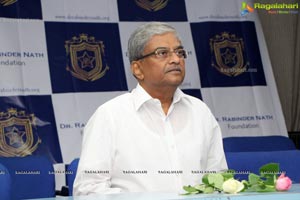
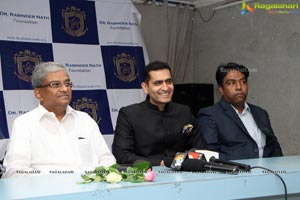
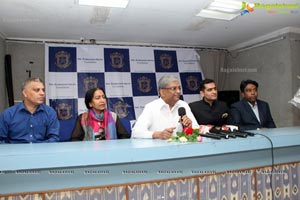
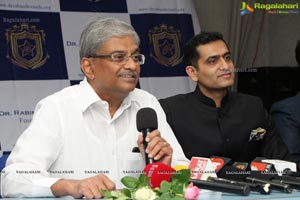
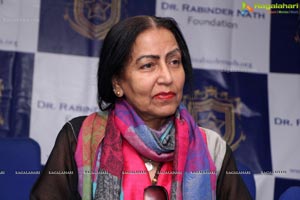
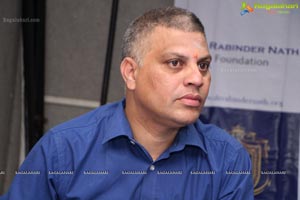
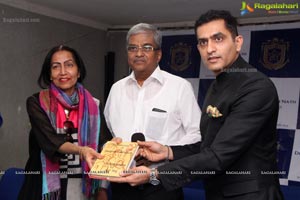
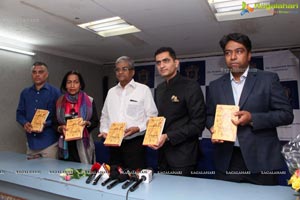
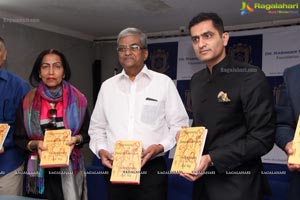
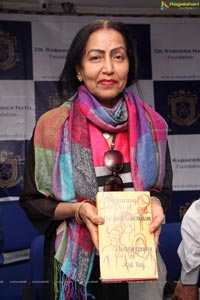
February 13, 2016 - The book launch event in Hyderabad. It was symbolic: from Punjab to Hyderabad, from past to present, from institutional building to community service.
The foundation continues the legacy through free chai counters - a different scale than founding banks, but the same spirit of service.
But that's the last we heard about the book after it was "relaunched."
Until now.
The holocaust that delayed this book's publication for years did more than scatter families - it fractured the continuity of thought and purpose that Mul Raj's generation had carefully constructed. In the rush to rebuild and move forward, the deeper heritage of ideas was overshadowed by simpler narratives of identity and belonging.
Today's generation carries the weight of heritage without understanding its substance. They know they're "Punjabi," they know they have "blue blood," but the connection to what that actually means has been severed.
The heritage became a badge of pride rather than a guide for action. Identity replaced understanding.
Economic nationalism didn't start with modern campaigns. Understanding the 1893 Swadeshi movement provides context for today's debates about self-reliance and globalization.
When modern banks face scandals, understanding the founding vision of institutions like PNB - built to serve the nation, not extract from it - becomes crucial.
Today's education reform debates echo the original D.A.V. vision: accessible, value-based education that builds character while teaching skills.
From founding national banks to running free chai counters - the scale changes, but the principle remains: service to community without expectation of return.
The challenge for current and future generations is to understand not just WHAT their ancestors did, but HOW and WHY they did it - to carry forward principles, not just pride.
A united family in Lahore - wealthy, connected, at the center of Punjab's transformation
The holocaust that shattered everything
Connection maintained but weakened over generations
Most connections lost over time
One Home → Three scattered branches
Strong Networks → Weak connections
Living Heritage → Forgotten book
Deep Understanding → Superficial pride
The book survived. The story survived. And now, through the Dr. Rabinder Nath Foundation, the spirit of service continues - connecting the Swadeshi movement of 1893 to free chai counters in 2024, proving that principles transcend tragedy and time.
A heritage rediscovered and shared with the world
After Dr. Rabinder Nath passed away, his son Abhishek Nath found this precious book among his father's belongings. Realizing its historical significance, he embarked on a journey to honor both his father's memory and his ancestor's legacy.
In 2016, Abhishek visited the Vishveshvaranand Vedic Research Institute (V.V.R.I.) in Hoshiarpur, Punjab - the very institute his great-great-great-grandfather had helped establish. The staff at V.V.R.I. were in awe when they learned that a descendent of their founder had returned after all these years.
The book was reprinted with new binding featuring a distinctive red cover with brown paper folding, honoring the original while ensuring its preservation for future generations. The official launch event was held on February 13, 2016, in Hyderabad, marking the inaugural initiative of the Dr. Rabinder Nath Foundation.
Found among Dr. Rabinder Nath's belongings after his passing
Visit to V.V.R.I. Institute in Hoshiarpur reconnects family with heritage
New edition with red cover and brown paper folding
February 13, 2016 - First initiative of DRNF
View photos from the book launch event held in Hyderabad on February 13, 2016
View Event GalleryWatch the coverage of the historic book relaunch ceremony
Book Launch Event Coverage - February 13, 2016, Hyderabad
An in-depth look at the structure, content, and unique aspects of this historic autobiography
Dictated as reminiscences to grandson Dr. Upender Nath in the 1930s, capturing authentic voice and firsthand memories spanning 90 years of Indian history.
Completed in Lahore, 1942. Edited by Acharya Dr. Vishva Bandhu Ji in 1973 "to fulfil my spiritual obligation" to preserve this crucial historical document.
Further edited by Air Marshal Ajit Nath and associates. Published by V.V.R.I. Hoshiarpur in 1975, bringing together family and scholarly expertise.
New binding with distinctive red cover and brown paper folding, preserving the original content while ensuring accessibility for modern readers.
Written in English with some Urdu pamphlets and letters included. Contains correspondence from Swami Dayanand, newspaper clippings, duty postings, and family tree.
Badly written with no timelines and grammatical errors, but BOLDLY WRITTEN with authentic voice. Chapters organized by career roles rather than chronological order.
Chapters organized around Mul Raj's various roles and contributions
1855-1878: From humble beginnings in Ludhiana to becoming the first Punjabi M.A. from Calcutta University.
The transformative encounter that shaped his life's mission and India's religious reform movement.
1879-1912: Three decades as Extra Assistant Commissioner, District Judge, navigating colonial administration.
Founding and growing the D.A.V. education network that revolutionized Indian education with Vedic values.
Conceiving Punjab National Bank and Bharat Insurance Company - institutions for economic independence.
Pioneering economic nationalism 30 years before Gandhi, promoting Indian goods and self-reliance.
Drafting the first INC constitution and advocating for industrial development alongside political freedom.
Establishing Gandharva Maha-vidyalaya and reviving classical Indian music traditions in colonial Punjab.
Promoting ancient medical systems and founding Mahesh Ayurvedic Pharmacy to preserve healing traditions.
1912-1945: Continued advocacy from "Willows" bungalow in Lahore, witnessing India's transformation and Partition.
Personal letters from Swami Dayanand, colonial officials, and freedom fighters - primary historical documents.
A comprehensive chronicle of pivotal moments in Indian history
Powerful passages that capture the spirit of an era
"If Swami Dayanand had introduced philosophical questions, doctrines and theories into the articles of faith of the Arya Samaj, he would certainly have limited the number of men who could have entered it... For, the greater the number of men who can join together to revive the study of the Vedas and the worship of the Unincarnate God, the greater will be the good they can do to themselves and to humanity."
"Historic changes have occurred in India since Mul Raj passed away, but his beliefs and ideas remain applicable to the contemporary scene in India today, and more so in Punjab after two partitions."
"The holocaust which preceded and followed the Partition of the country ruined and disrupted many Punjabi homes and families. Because of this, it took many years for the manuscript to receive attention and be published."
"In the days to come unbiased scholars will reconstruct the history of Arya Samaj on the basis of this autobiography."
Mul Raj became a "silent spectator of the petty bickerings of the power-hungry individuals" - showing his disillusionment with institutional politics while maintaining his commitment to service and reform.
"Ek Mola, do Rallia, chautha Thakur Datt; Charon pawe pirhi de charon chaurchapat"
A rare historical document unlike any other
First-hand account of Arya Samaj founding from inner circle member. Founding president of Arya Samaj Lahore shares insider perspectives unavailable elsewhere.
Inside view of colonial administration by Indian officer - the first Punjabi Extra Assistant Commissioner reveals governance from within the system.
Documents Punjab National Bank's actual founding story with details of vision, challenges, and triumph in creating Indian-controlled finance.
Chronicles Swadeshi movement 30 years before Gandhi - revealing the true origins of economic nationalism in 1893.
Provides Indian National Congress constitutional history - firsthand account of drafting the first INC constitution in 1893.
Personal interactions with major historical figures - from Swami Dayanand to the Nehrus, Madam Blavatsky to Lala Lajpat Rai.
Witness to transformation of Punjab (1855-1945) - spanning from British consolidation to the brink of independence.
Fills gaps in research about early Indian nationalism - provides primary source material for scholars studying this crucial period.
Family perspective on Partition impact - chronicles the human cost and disruption to Punjabi families during 1947.
Silent about revolutionary activities "dear to his heart" (as noted by editor) - suggesting deeper involvement in freedom movement.
From dictation in Lahore to relaunch in Hyderabad
Mul Raj dictates his reminiscences to his grandson Dr. Upender Nath (Royal Surgeon to the Nizam) in Lahore, preserving memories spanning 90 years.
Original manuscript completed in Lahore, capturing firsthand accounts of India's transformation and the freedom movement.
Rai Bahadur Mul Raj passes away at age 90, having witnessed nearly a century of Indian history from colonial rule to the brink of independence.
The holocaust of Partition disrupts publication plans. The family flees Lahore via airlift arranged by Air Marshal Ajit Nath, relocating to Hyderabad.
Acharya Dr. Vishva Bandhu Ji edits the manuscript "to fulfil my spiritual obligation" to preserve this crucial historical document.
Published by V.V.R.I. Hoshiarpur after final editing by Air Marshal Ajit Nath and associates, making this precious history available to scholars.
The book remained relatively unknown outside scholarly circles, awaiting wider recognition of its historical significance.
Abhishek Nath rediscovers the book among his father Dr. Rabinder Nath's belongings after his passing, recognizing its historical value.
Historic visit to V.V.R.I. in Hoshiarpur - "descendant of the founder returns" after decades, reconnecting family with heritage institution.
Official relaunch event in Hyderabad marks the first initiative of Dr. Rabinder Nath Foundation, with new binding featuring red cover and brown paper folding.
The book serves as a heritage piece connecting the family to wider Indian history, inspiring continued service through the Foundation's community programs.
A photographic journey through history - from the book launch to historical archives
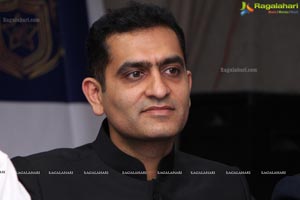
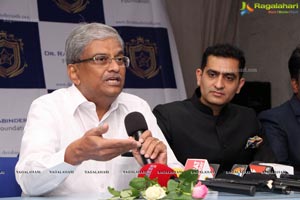
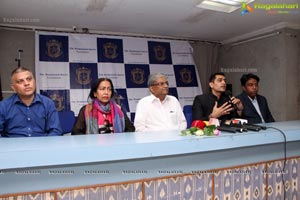
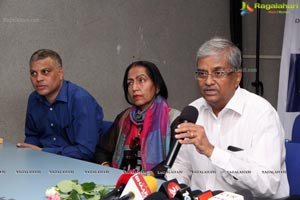
First initiative of Dr. Rabinder Nath Foundation | Hyderabad
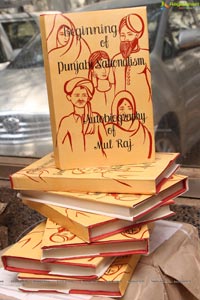
Red cover with brown paper folding (rebinded 2016)
Original 1975 binding
V.V.R.I. Hoshiarpur publisher mark
Opening page of the autobiography
Title: "Beginning of Punjabi Nationalism"
Autobiography of R.B. Mul Raj
Table of contents showing chapters
Life events organized chronologically
Major achievements documented
Historical correspondence
Letters from Swami Dayanand Saraswati
Arya Samaj founding documents
Historical newspaper articles
Coverage of major events
Contemporary accounts
Original documents in Urdu
Historical pamphlets and notices
Arya Samaj publications
Fold-out family tree towards the end of the book
Mul Raj to Prem Nath to Upender Nath lineage
"We don't know anyone else but Sheela & Ajit Nath's families"
Recent connection with Vishveshwar Nath's descendent in London
R.B. Mul Raj in center amongst members
Historical photograph from the book
Arya Samaj leadership gathering
Historical photographs of Lahore
The city during British Raj
Where the family lived and worked
Historical photos of D.A.V. College
Founded by Rai Bahadur Mul Raj
Educational institution building
Original PNB building
First Indian-controlled national bank
Founded by R.B. Mul Raj in 1894
Historical Tribune newspaper offices
Founded with Sardar Dyal Singh Majithia
Early journalism and media
Vishveshvaranand Vedic Research Institute
Hoshiarpur, Punjab
Preserved and published this book
Historical Arya Samaj meetings
Reform movement gatherings
Social and religious reformers
Historical transformation through generations
"Willows" bungalow
Family ancestral home
DRNF Location
Continuing the legacy
First edition
V.V.R.I. Hoshiarpur
Red cover edition
DRNF Launch
Founded in Lahore
Revolutionary education
900+ institutions
Millions educated
First Indian bank
Economic freedom
Major public sector bank
Serving millions
Early journalism
Voice of reform
Leading newspaper
140+ years strong
Vedic research begins
Preserving knowledge
Continuing research
Heritage preserved
Explore all photos from the book launch event with full resolution images and additional coverage
Visit Ragalahari GalleryEvent Photos: Courtesy of Ragalahari.com
Historical Images: V.V.R.I. Hoshiarpur Archives
Family Photographs: DRNF Collection
A comprehensive chronicle of India's transformation
A primary source document that illuminates crucial gaps in Indian history
Fills critical gaps in various research papers about the Arya Samaj movement. As a founding member and first president of Arya Samaj Lahore, Mul Raj provides insider accounts unavailable elsewhere.
First-hand account of the early Indian National Congress. Mul Raj drafted its first constitution in 1893, providing unique insights into the birth of India's freedom movement.
Documents the founding of Punjab National Bank, the first Indian-controlled national bank. Chronicles the vision, challenges, and triumphs of creating indigenous financial institutions.
Reveals that the Swadeshi movement began in 1893, three decades before Gandhi's campaigns. Mul Raj founded Swadeshi Pracharini Sabha and published weekly bulletins promoting Indian goods.
Provides rare insider view of colonial administration from the perspective of the first Punjabi Extra Assistant Commissioner. Shows governance from within the system.
Demonstrates the synthesis of Eastern and Western thought that characterized the Indian Renaissance. Shows how educated Indians navigated between tradition and modernity.
"If Swami Dayanand had introduced philosophical questions, doctrines and theories into the articles of faith of the Arya Samaj, he would certainly have limited the number of men who could have entered it..."
The Vishveshvaranand Vedic Research Institute (V.V.R.I.) was founded by Rai Bahadur Mul Raj and his colleagues to preserve and promote Vedic knowledge and Sanskrit learning.
Originally established in Lahore, the institute was formally re-established in Hoshiarpur in 1936 and continues to operate from Sadhu Ashram, Hoshiarpur, Punjab. The institute published "The Beginning of Punjabi Nationalism" in 1975 and maintains copies to this day.
V.V.R.I. continues its mission of Vedic research, Sanskrit scholarship, and preservation of India's intellectual heritage - a fitting tribute to its founder's vision of combining traditional wisdom with modern scholarship.
Ongoing research and publication of Vedic texts and commentaries
Promotes Sanskrit learning and classical Indian literature
Maintains manuscript collections and historical documents
Learn more about the institute founded by Rai Bahadur Mul Raj
Visit WebsiteThe institutions and movements Mul Raj founded continue to shape India
Still operates as one of India's major public sector banks, serving millions. Though facing modern challenges, PNB embodies Mul Raj's vision of Indian-controlled financial institutions supporting national development.
The D.A.V. College Trust and Managing Society operates hundreds of schools and colleges across India, educating millions of students. The network continues the mission of combining modern education with cultural values.
The Arya Samaj continues to function worldwide, though it has evolved from Mul Raj's original inclusive vision. The movement's emphasis on social reform and Vedic learning remains influential.
The Vishveshvaranand Vedic Research Institute in Hoshiarpur continues its research and publication work, preserving Sanskrit scholarship and Vedic knowledge for future generations.
Carries forward the family's service legacy through free chai counters, community programs, educational workshops, and environmental initiatives in Hyderabad - continuing the tradition of compassionate service.
Most importantly, Mul Raj's example of using privilege and education to serve society continues to inspire. His life demonstrates how individual action can create lasting institutional change.
Timeless insights that remain relevant today
"If Swami Dayanand had introduced philosophical questions, doctrines and theories into the articles of faith of the Arya Samaj, he would certainly have limited the number of men who could have entered it..."
The book documents historic changes in India that remain applicable today, showing how the seeds of modern India were planted over a century ago through dedication, vision, and institutional building.
The autobiography provides vivid accounts of the holocaust that preceded Partition, offering crucial historical perspective on one of the 20th century's greatest tragedies.
Comprehensive journey through the life of Rai Bahadur Mul Raj (1855-1945)
From the Sepoy Mutiny to Independence movement, witness nine decades of transformative Indian history through the eyes of one extraordinary man who founded institutions, built banks, and shaped modern Punjab.
Connect with the living legacy through these pathways
Location: Hoshiarpur, Punjab
Original publisher and keeper of the book. Walk in the footsteps of the founder.
Visit V.V.R.I. WebsiteLearn more about the book and family legacy
Learn more about the book, visit V.V.R.I. Institute in Hoshiarpur, or connect with the Dr. Rabinder Nath Foundation to explore this remarkable family legacy and how we continue the tradition of service today.